Industrial Services
Robotic solar panel cleaning for solar farms and industrial sites
Makhaya Corrosion Control provides robotic solar panel cleaning for large solar farms, mining plants and commercial and industrial installations in South Africa and Zambia. We also consider projects in other SADC countries, subject to mobilisation.
Every enquiry starts with your site. We look at the layout, mounting, the module manufacturer's cleaning instructions, access and water, then confirm whether robotic cleaning suits the installation and how the work would be done. The service focuses on large commercial, industrial, mining and utility-scale installations.
Suitable sites
Sites we clean
Solar farms
Utility-scale plants: RFQs from owners and O&M contractors, row access, fixed or tracker arrays, water and logistics.
Mine solar installations
Solar plants on and around mine sites, where haul-road and stockpile dust, inductions and site rules shape the work.
Large commercial rooftops
Factories, warehouses, distribution centres, offices and shopping centres — roof access, load limits and fall protection first.
Zambia
Solar farms, mining and commercial and industrial sites in Zambia, with mobilisation agreed for each project.
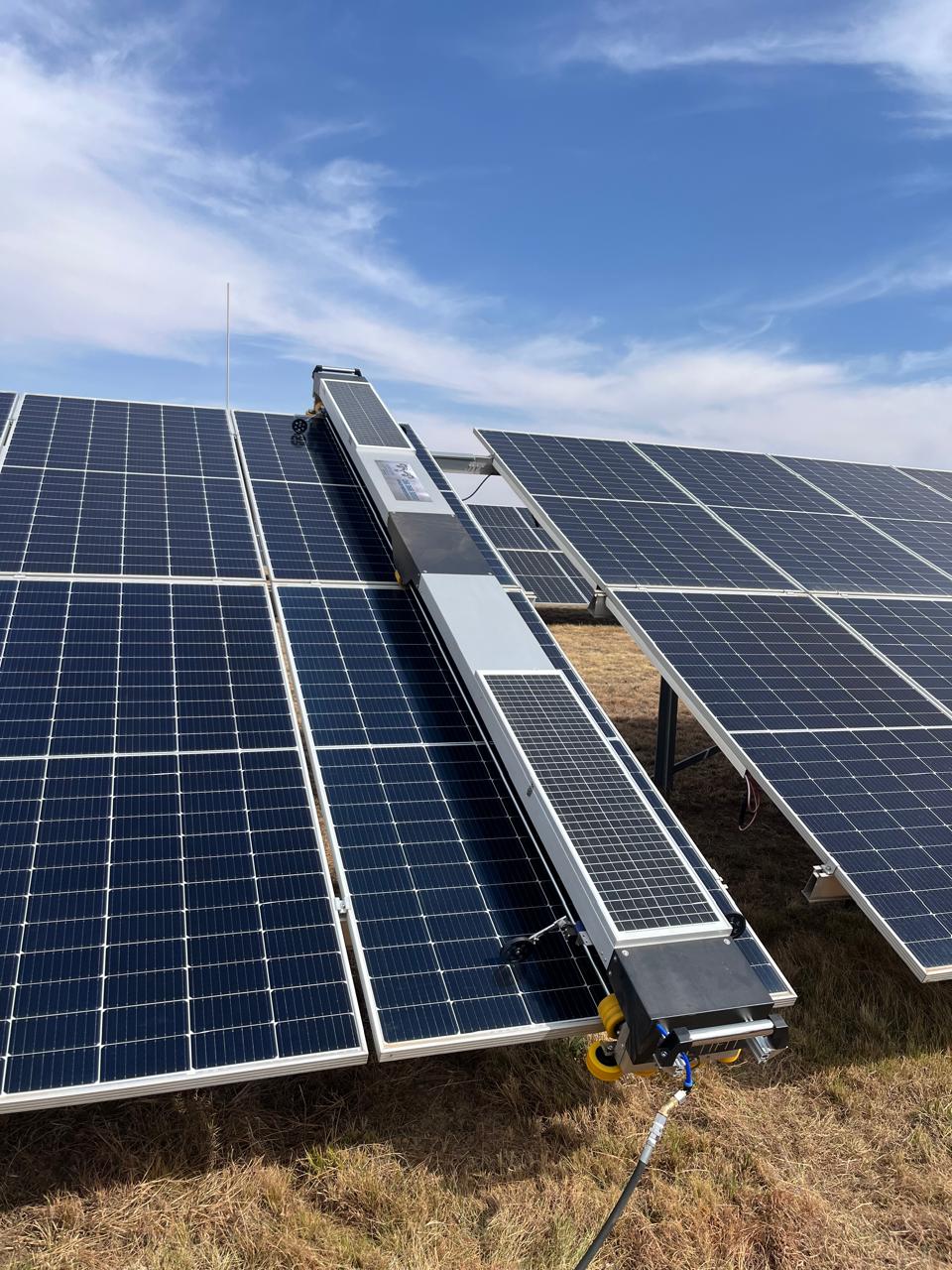
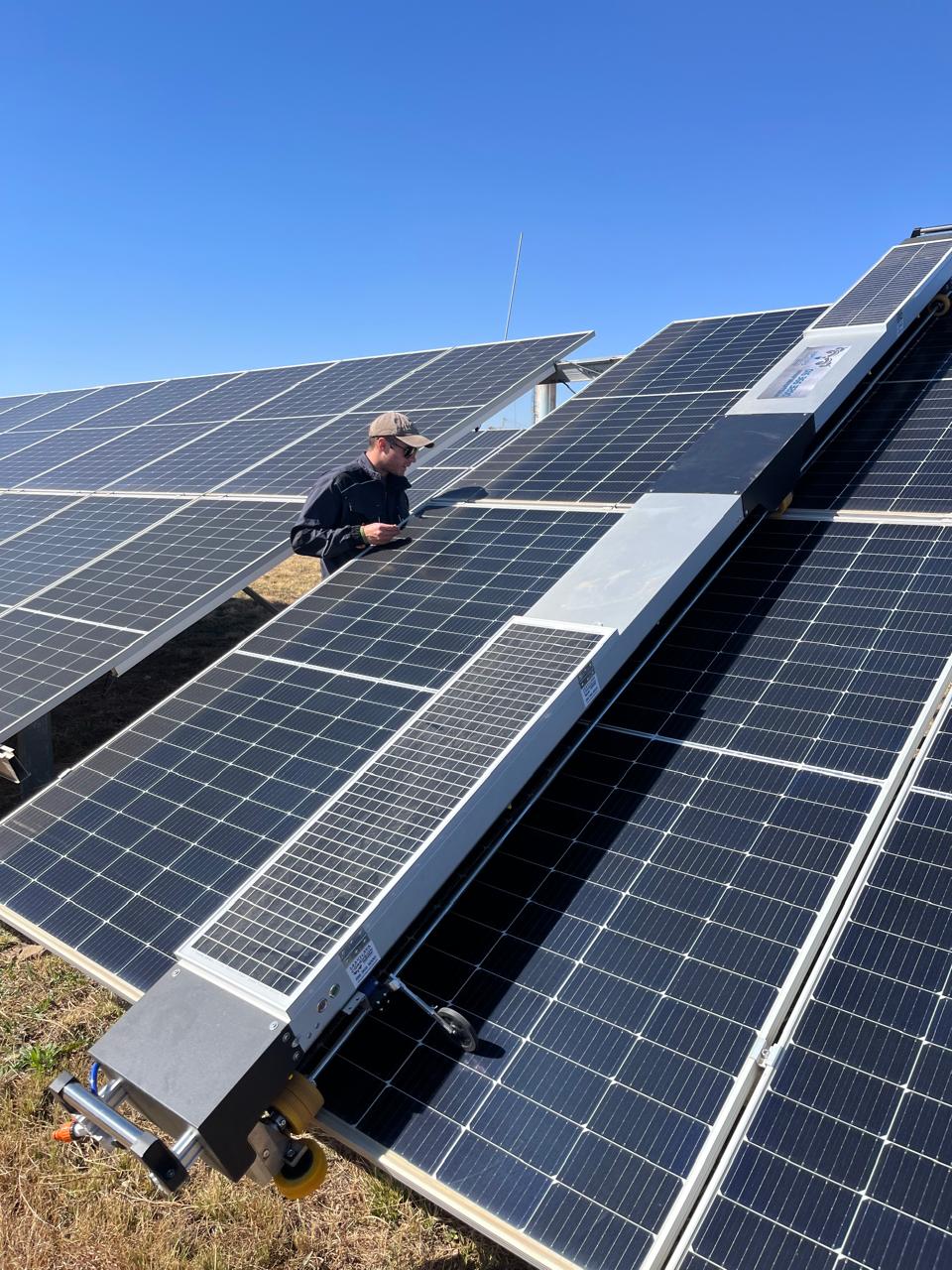
Robotic cleaning in action
How the site assessment works
- 01
Tell us about the site
Location, site type, approximate MWp or panel count (or “unknown”), mounting type and whether you need a one-off or recurring clean.
- 02
Share what you have
Layout drawings, module datasheets and the manufacturer's cleaning instructions, site rules and any RFQ documents.
- 03
Review access and conditions
Where needed we visit or review remotely: row access, surfaces, dust sources, water availability and site safety requirements.
- 04
Confirm the method
We confirm that robotic cleaning suits the array, and whether dry or water-based cleaning is the better fit for your site.
- 05
Receive a quote
The quote sets out the scope, frequency options, what the site needs to provide and how the work would be scheduled.
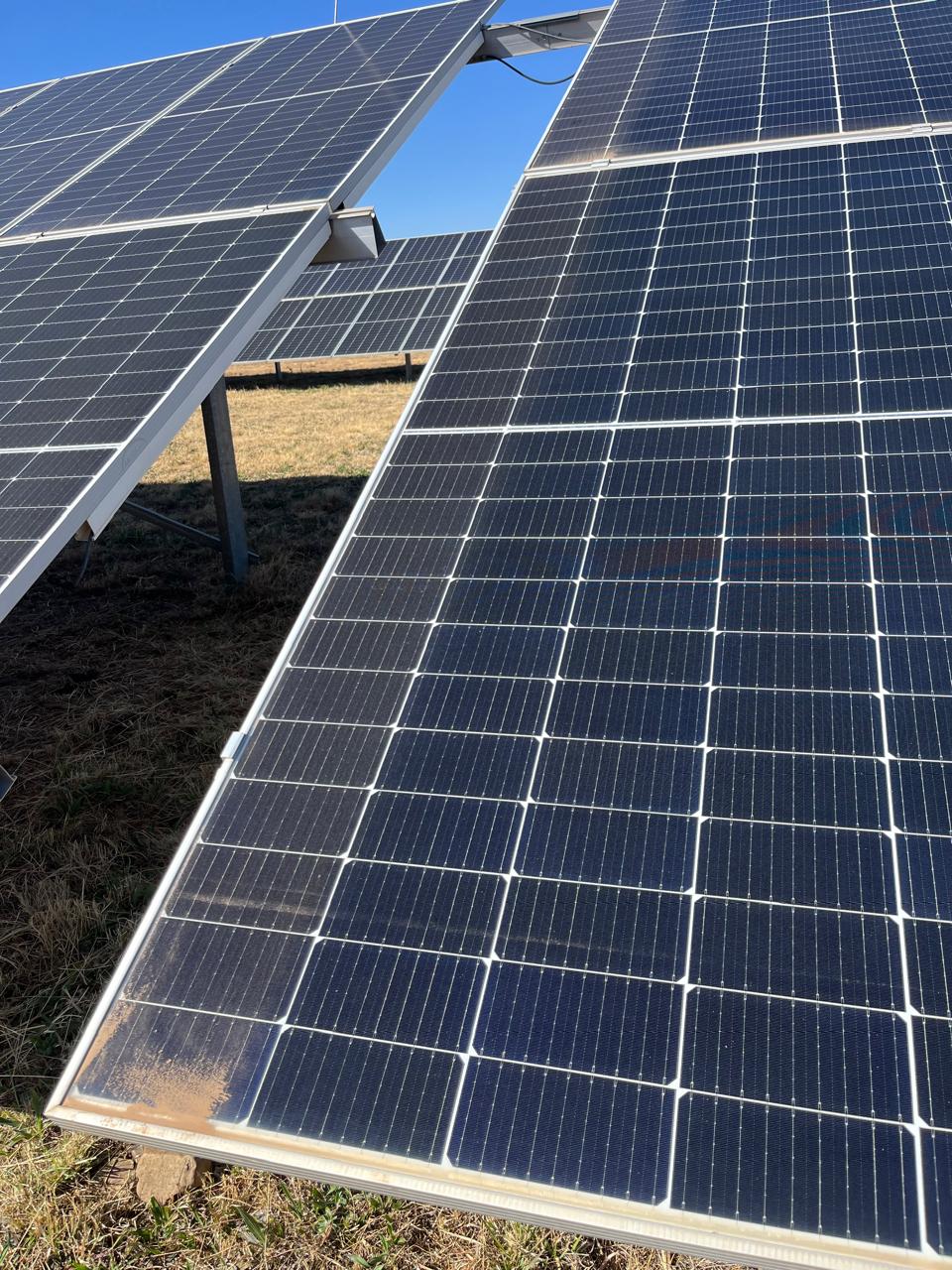
Soiling is different on every site
How quickly panels get dirty depends on local dust sources — gravel roads, mining, agriculture, construction — as well as rainfall, wind, panel tilt, bird activity and how often the site is already cleaned. A plant in an arid area with long dry seasons behaves very differently from one that gets regular rain.
Because of this we don't promise a fixed energy gain, and we don't apply a one-size cleaning schedule. If your O&M team already monitors plant performance, that data helps decide when cleaning is worthwhile. A cleaning enquiry or quote concerns module cleaning; any additional assessment, monitoring, electrical or maintenance requirements must be discussed and separately agreed with the site team.
Site, layout and module requirements
- Module manufacturer cleaning instructions and warranty conditions — we work to them and confirm them with the owner.
- Mounting: the robots suit fixed-tilt and tracker arrays; tracker design and stow positions are checked per site.
- Row layout, spacing, row ends and how equipment moves between rows.
- Access roads, gates, laydown space, permits and site inductions.
- Water availability and quality, if water-based cleaning is chosen; dry cleaning is also available.
- Work windows and the site's own electrical safety rules, agreed with the site's authorised people.
Where we work
South Africa
Solar farms, mine sites and commercial and industrial installations across the country, managed from our Randvaal head office. See solar farms, mining and commercial rooftops.
Zambia
Solar farms, mining and commercial and industrial sites, with mobilisation agreed per project. Read about solar panel cleaning in Zambia and our wider Makhaya Zambia operation.
Other SADC countries
We consider projects elsewhere in the SADC region case by case. Mobilisation, permits, transport and logistics are assessed and agreed before we quote — see cross-border enquiries.
Contracts, costs and regions
Cleaning contracts
One-off and repeat module-cleaning scopes for plant owners and O&M procurement teams.
What affects cleaning costs
Why MWp alone doesn't set the price, and how to compare cleaning quotes like for like.
Northern Cape
Utility-scale and industrial enquiries: dust, remote access, water and logistics.
SADC cross-border enquiries
Botswana, Namibia, Zimbabwe, Mozambique and elsewhere — assessed per project.
How often to clean a solar farm
A guide to setting cleaning frequency from site conditions and plant data.
More guides on our Insights page.
Frequently asked questions
Which installations is this service designed for?
Large commercial, industrial, mining and utility-scale installations — solar farms, mine solar plants and large commercial and industrial rooftop or ground-mounted systems.
How much will cleaning improve output?
We don't promise a set gain. The effect of cleaning depends on how dirty the panels are, local dust and rainfall, panel tilt and how often the site is already cleaned. If your O&M team tracks plant performance, that data is the best guide.
Can robots be used on tracker arrays?
Yes. Our robots are suitable for both fixed-tilt and tracker arrays. We still check the tracker design, row layout and stow positions for each site so the work can be planned with the O&M team.
Do you need water on site?
Not always. Our robots can clean dry or with water, so the method is chosen to suit your site's soiling, the module manufacturer's instructions and the water available. Tell us what water you have and we'll take it into account in the quote.
How often should the panels be cleaned?
There's no universal schedule. We can quote a one-off clean or a recurring programme, based on your site's dust conditions, rainfall seasons and the owner's or O&M team's requirements.
Which robot or equipment do you use?
Our robots can clean dry or with water, and are suitable for both fixed-tilt and tracker arrays. We share the make and model directly with plant owners and site teams during an enquiry rather than publishing them. Ask us by phone on +27 16 366 3200 or email reception@corrosioncontrol.co.za and we'll take you through the equipment proposed for your site.
How fast is robotic cleaning compared with manual cleaning?
Speed differs from plant to plant. As a guide, cleaning one table of 57 panels by hand with a rotating brush takes about an hour; our robots clean the same table in about 14 minutes.
Is Makhaya certified?
Yes. Makhaya holds ISO 9001 certification (since 2011) and ISO 45001 certification, and is a Level 2 BBBEE contributor. You can download the certificates from the Certificates section of our About page.
How long has the company been operating?
Makhaya Corrosion Control, previously M&S Corrosion Control, was founded in 1981 as an industrial contractor. Robotic solar panel cleaning is one of the industrial services we offer today.
Get a quote for your site
Send us the basics and we'll come back to you about your installation. If you have an RFQ, layout drawings or module datasheets, mention them in your enquiry and we'll ask for them.
Prefer to talk? Call +27 16 366 3200 or use the contact page.
Request a site-specific quote
Gallery
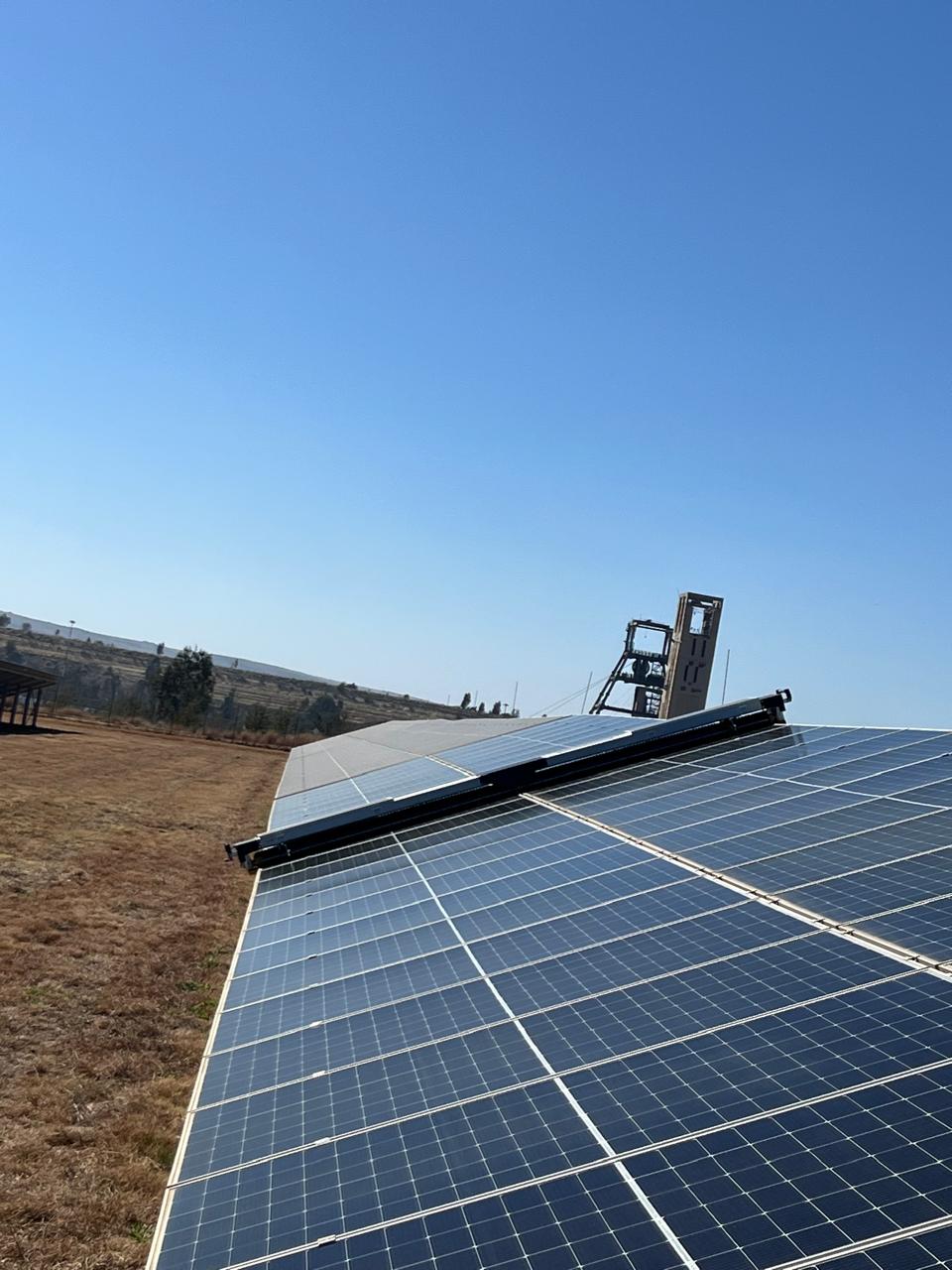
Robotic solar cleaning photos
Robot imagery and solar installation photographs are shown for illustration; no customer project is identified here.