Solar panel cleaning
Robotic solar panel cleaning in the Northern Cape
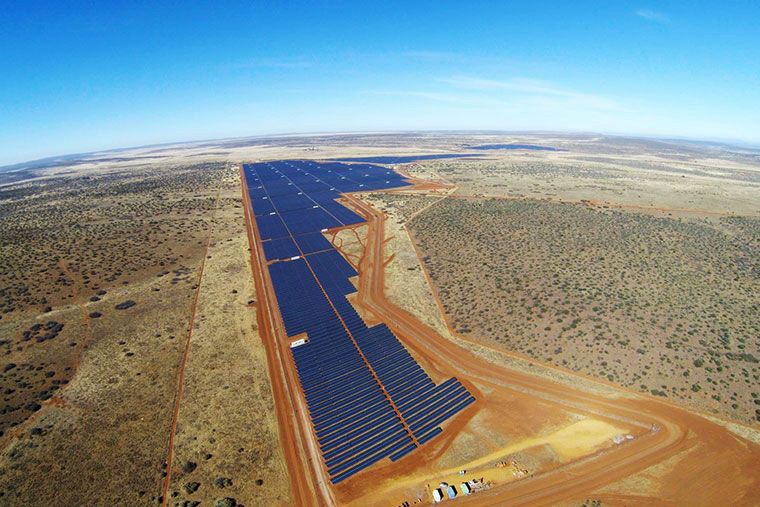
The Northern Cape is home to many of South Africa's large solar plants. We welcome robotic solar panel cleaning enquiries for utility-scale and industrial sites across the province — for example around Upington, Kathu, De Aar and Prieska.
Sites here are typically large, dry and a long way from anywhere, so planning starts with conditions and logistics rather than the panels alone. For the general approach, see the robotic solar panel cleaning overview.
Conditions to plan for
- Arid climate with long dry periods, so rain does little natural cleaning for much of the year
- Wind-blown dust and sand, which can return quickly after a clean
- Gravel access roads and internal tracks that add dust near the rows
- Mining activity in parts of the province, with heavier and different dust
- High summer temperatures that limit safe working hours
Because of this, cleaning frequency is proposed for each site, not copied from elsewhere — see how often a solar farm should be cleaned. Plants near mines are covered on our mine solar page.
Remote access and logistics
Distances from Gauteng are long, so travel, accommodation, secure storage for equipment and the number of working days on site all shape the quote. If the method needs water, we need to know whether the site can supply it or whether it has to be carted in.
These costs are set out in the quote rather than hidden in a rate — see what affects cleaning costs. For repeat cleaning on a plant, see cleaning contracts.
Site details to send
- Nearest town and a GPS pin for the site entrance
- Access route, gate arrangements and road condition
- Layout drawings and mounting type (fixed tilt or tracker)
- Capacity in MWp and module count, or “unknown”
- Water availability on site
- Site rules, inductions and permit requirements
- Preferred timing and whether you need a one-off or repeat clean
- Who manages the site day to day
Frequently asked questions
Do you have an office in the Northern Cape?
No. Work is managed from our Randvaal head office in Gauteng, and travel and mobilisation are planned for each project.
Do you cover the whole province?
We consider enquiries from anywhere in the province. Whether and how we can take on a site depends on its location, access and scope, which we confirm before quoting.
Can visits to nearby plants be combined?
If you manage several plants in the same area, tell us. It may affect how mobilisation is planned, but each site is still assessed and quoted on its own terms.
How does the heat affect the work?
Working hours and breaks are planned around the site's heat-stress rules and the season. In midsummer that can shorten the working day.
Water is scarce on our site — is that a problem?
Not necessarily. Tell us what's available. The cleaning method, and whether it needs water, is confirmed after the equipment and site assessment.
Which robot or equipment do you use?
We share equipment details directly with plant owners and site teams during an enquiry, rather than publishing them. Ask us by phone on +27 16 366 3200 or email reception@corrosioncontrol.co.za and we'll take you through the equipment proposed for your site.
How long has the company been operating?
Makhaya Corrosion Control, previously M&S Corrosion Control, was founded in 1981 as an industrial contractor. Robotic solar panel cleaning is one of the industrial services we offer today.
Quote for a Northern Cape site
Give us the nearest town and what you know about the plant. Access and water notes help us plan the trip.
Request a Northern Cape quote
Other solar cleaning pages
Robotic solar panel cleaning
Overview, assessment process and site requirements.
Solar farms
Utility-scale plants: RFQs from owners and O&M contractors, row access, fixed or tracker arrays, water and logistics.
Mine solar installations
Solar plants on and around mine sites, where haul-road and stockpile dust, inductions and site rules shape the work.
Large commercial rooftops
Factories, warehouses, distribution centres, offices and shopping centres — roof access, load limits and fall protection first.