
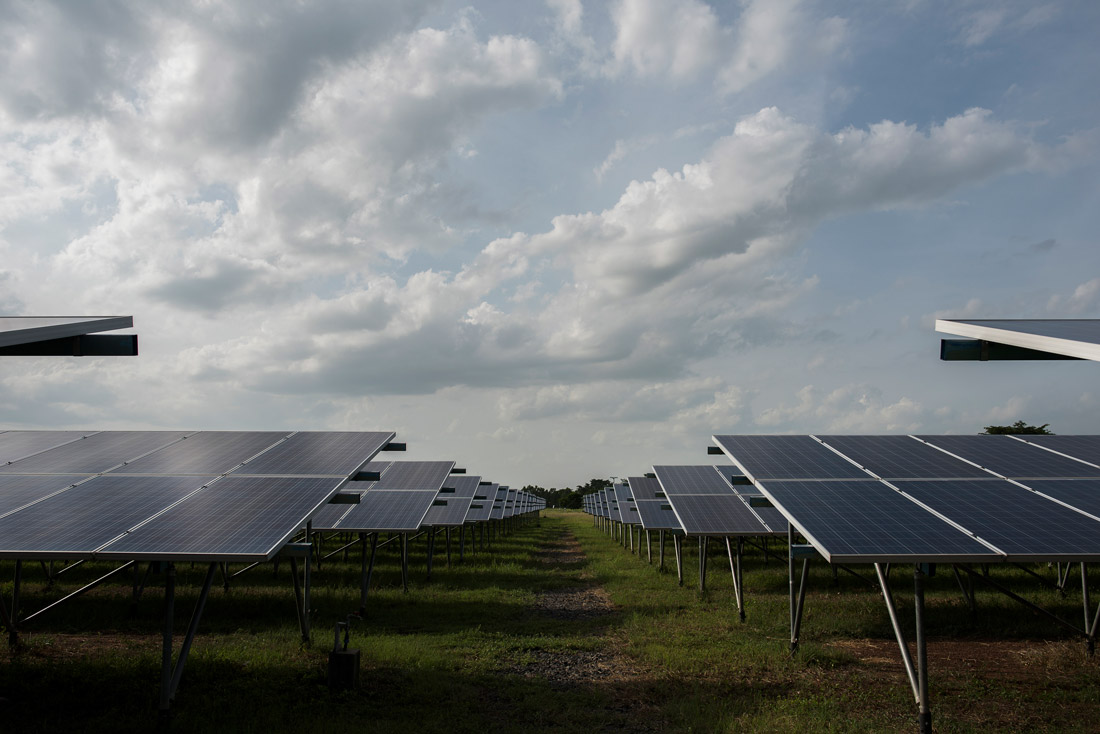
The honest answer is: as often as your site needs it, and no more. There is no single cleaning interval that suits every plant. The right frequency comes from how quickly your panels soil, how much that is costing in lost energy, and what a clean costs on your site.
Published by Makhaya Corrosion Control · 27 October 2026
Why soiling differs from site to site
Soiling is the build-up of dust and dirt on module glass. How fast it happens depends on the plant's surroundings — gravel roads, mining, farming or construction nearby — and on wind, humidity, panel tilt and bird activity. Two plants in the same province can soil at very different rates.
Rainfall matters too. Good rain can wash panels naturally, while dew or light showers can make dust stick harder. That makes soiling seasonal: a plant may barely need attention in a wet season and soil quickly through a long dry one.
The IEA PVPS Task 13 report on soiling losses in PV power plants (2023) describes soiling as one of the biggest influences on PV yield after sunlight itself, especially in arid regions, and notes that it varies strongly across modules and across a plant — which is why cleaning decisions need site data rather than a rule of thumb.
Start with the data you already have
Most plants already collect performance data. Reviewing it with the plant operator or O&M team is the best way to see whether soiling is building up — for example how output compares with expectations through a dry spell, how it changes after rain, or how cleaned and uncleaned areas compare after a trial clean.
A cleaning enquiry or quote concerns module cleaning: we clean the modules when you decide a clean is justified, using a method confirmed for your site. Any additional assessment, monitoring, electrical or maintenance requirements must be discussed and separately agreed with the site team.
Not every drop in yield is dirt
Before scheduling a clean, rule out the other common reasons a plant produces less:
- Lower irradiance from cloud, haze or season
- High module temperatures
- Inverter, tracker or string faults
- Grid curtailment or outages
- Shading from vegetation or new structures
- Normal module ageing
Cleaning only helps with the part of the loss that is actually caused by soiling.
Turning it into a cleaning plan
In practice, owners either call for a one-off clean when the data shows it's worthwhile, or set up a repeat scope timed around the dry season and review it as results come in. Both are reasonable — what matters is that the timing follows your site rather than a calendar.
See solar farm cleaning contracts for how one-off and repeat scopes are set up, and solar panel cleaning for mines if your plant sits near mining dust.